Beyond the Data: The Spearpoint Chart Guiding Our Combustion Control

Published by Christy Reed on

Beyond the Data: The Spearpoint Chart Guiding Our Combustion Control

Noel Putaansuu

Share
Share on facebook
Share on linkedin
Share on email
Listen to the audio article.

For most, there is an art to woodstoving—it need not be all science and technology. For others, the science is the reason we burn wood to heat and cook. For decades, optimizing wood stove efficiency has been an art as much as a science, relying heavily on intuition and experience. That era is rapidly changing. We’re on the cusp of a significant leap forward, empowered by a powerful new analytical tool that transforms raw data into actionable insight. This isn’t just about incremental improvements; it’s about a fundamental shift in control. What you’re about to see is the one chart at the point of the spear, the cornerstone of our latest combustion air algorithms, showing precisely how we’re pushing the boundaries of fuel efficiency and sustained heat.

This isn't just about incremental improvements; it's about a fundamental shift in control. What you're about to see is the one chart at the point of the spear, the cornerstone of our latest combustion air algorithms, showing precisely how we're pushing the boundaries of fuel efficiency and sustained heat.

This article is brought to you by Stove Team International.

The problem statement: Biomass combustion or solid fuel conversion to gases that will burn normally makes smoke that can be visible to the eye and an odor to the senses.

Sometime ago, Smokeless Chimney was one of six projects that started a cooperative research program with one of the National Laboratories. We are approaching the end of the project, and the data is starting to show the status of the technology. 

In the simplest terms, the lab received three smoke measurement devices called Octorings. There was some onboarding time to get the units working in the lab after shipping. Initial tests were performed, and regular meetings were held to discuss the status and how to proceed. The units were tied into the data collection system so that the data could be combined with the other combustion science data coming in. The tests the lab runs are highly confidential. They run numerous tests and show me only small sections, such as problem data sets.

I am quite familiar with fire testing, data collection, smoke measurement, and gas sampling. I worked with the lab team to merge the data coming into the lab computer system.

Initial testing was with water vapor. One of the products of combustion is water vapor. The question became this: If water was 100% Relative Humidity and condensing, how would this affect the opacity reading? Water was aggressively boiled with water vapor sent through the Octoring measurement system. With clouds billowing a maximum of 2% opacity was considered impressive. This was presented by a young intern who did an admirable job.

Why is this? Light is scattered in clouds or fog, but the brightness of the light is not lost.

The three Octorings sent to the National Laboratory had names that matched mountain peaks:

  1. St. Helens 
  2. Adams
  3. Rainier

For the testing, the Adams unit is the workhorse and the remaining two are for spare parts or a spare working unit, in the event that one fails during the intense test series.

The testing started on a pellet stove. Pellet stoves tend to produce less visible smoke than a wood stove, and many thought that opacity was not an adequate technology for measuring smoke, especially from our clean burning pellet stoves. The charts show an increase in opacity each time the auger dumps pellets into the combustion zone.

The testing went on to a catalyst cord wood stove; there was enough smoke to measure there. The right side of the chart has two hours of data, with one hour of visible smoke recorded.

This is how the technology works.

A stable light source is projected through the smoke in the stack. The light is stable for both brightness and color. Reference light levels and color of the light source are stored while the beam is clear. Once the smoke filters and scatters the light, the sensor receives reduced light and a change in the color of the light. A value is determined for Opacity and ColorShift.

Opacity is a legal metric used to measure smoke emissions from stacks. If you were to receive a ticket for smoke emissions, there would be an Opacity value, time, date, and address on the ticket.

ColorShift is not well understood. There continue to be discussions on what physical science applies and what value this reading has. 

ColorShift is a product of light projected through a colloid and the Tyndall scatter effect. Smoke is a colloid of particles and liquid drops suspended in air. When these particles are smaller than the peak wavelength of the light, Red is 600 nm, Green is 500 nm, and Blue is 400 nm (nanometers). The particles smaller than 500 nm tend to scatter more of the blue light and allow the red and green light to proceed through at higher levels. This shifts the color to red and is measurable to 3 digits.

Where have you witnessed this:

  • A drop of gasoline on water presents a rainbow of colors. The green is an oil thickness of 500 nm.
  • When the sun sets on the horizon on a smoky day, the light you see from the sun will shift to red.

Although this seems clear, science has yet to prove the concept to other skeptical scientists. What this means: The Octoring can either detect particle size and quantity or not. Time will tell.

With ColorShift still being scrutinized, opacity was the primary work focus. Opacity is simple, the equation to measure, calculate, and reference to calibration filters. A camera neutral density or ND filter is a common part obtained from a camera store.

The Equation: 

Opacity=(1−T)×100%
So, if 70% of light is transmitted (T=0.7), then the opacity is (1−0.7)×100%=30%.

That is enough math; there will not be a quiz. 

Most of the lab instruments for measuring smoke are downstream in the dilution tunnel. Modern sensitive particle meters are not tolerant of hot gases. Gas analyzers that measure oxygen, carbon monoxide, and carbon dioxide need pre-filters, water vapor removal, and cooling to near room temperature, or there are expensive repairs.

For field measurement, this gas collection, dilution, cooling, particle collection, and water removal is extremely high maintenance and parts intensive. Micro-pumps, desiccators, fine particulate filters, and scales to weigh the mass of soot particles collected are a complex process. Collecting soot particles directly in the field is not practical due to the inherent challenges of maintaining sample integrity and controlling environmental variables.

Compare this to a chimney mounted system that simply takes a picture of hot gas particles prior to releasing to the environment, sending out data in real time every few seconds, 24 hours a day, seven days a week. With as many as three digits of precision (i.e., 19.4% opacity), it may be a better method.

How will this change the wood stove operator’s view of woodstoving?

One of the main problems for the wood stove operator is when to refuel, when to open the door, break down the charred fuel, and insert new fuel. Using this technology, the operator will be coached to refuel while the stove is still in the Goldilocks zone: not too hot, not so cold that it smokes when new fuel is added. Once fuel is added, the control system ramps up the air to involve the new fuel.
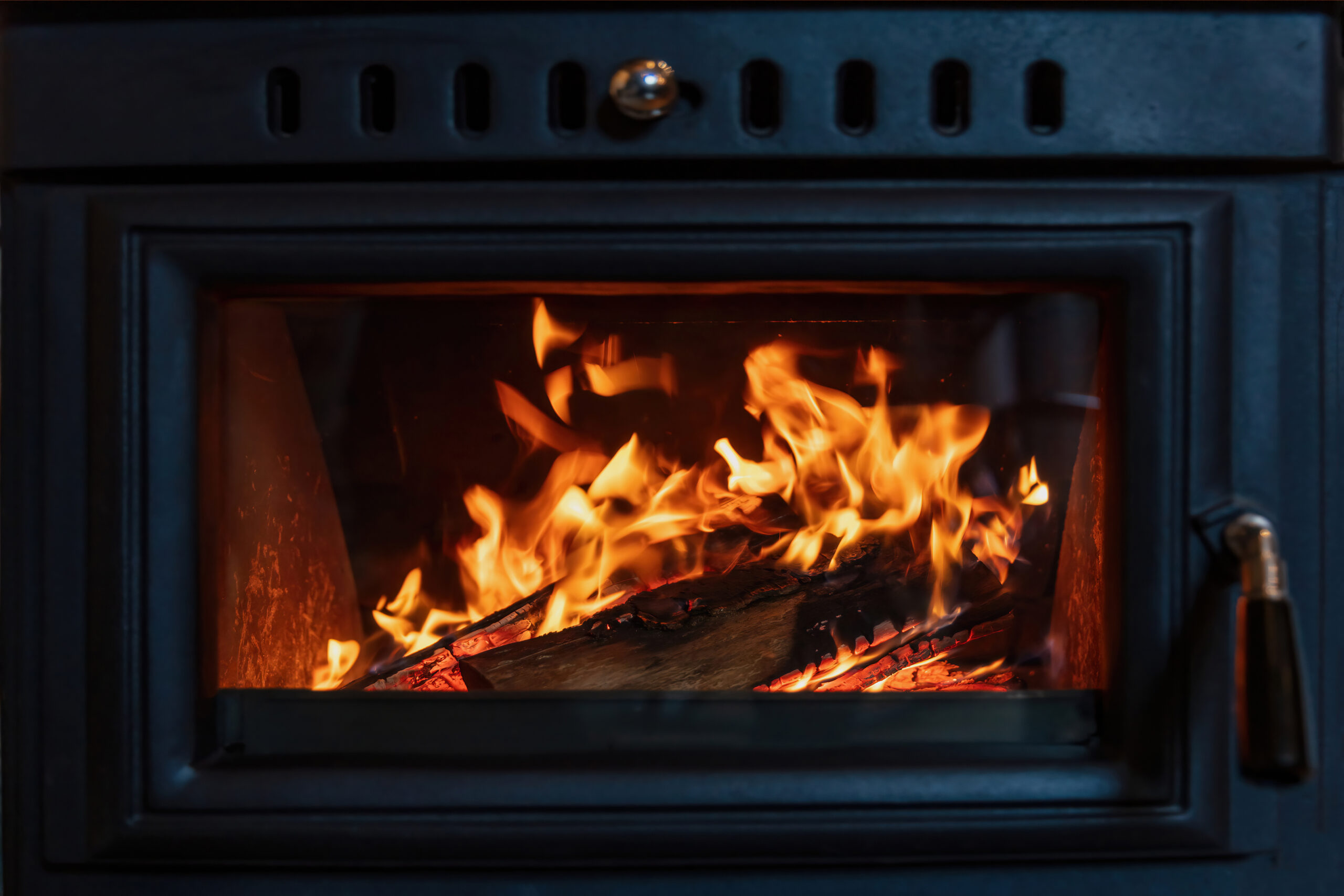
Using this technology, the operator will be coached to refuel while the stove is still in the Goldilocks zone: not too hot, not so cold that it smokes when new fuel is added.

The smokeless chimney system has more than smoke measurement. This isn’t only the technology that the Department of Energy wants to investigate. There is more technology being developed. Combustion air controllers will take the information from the smoke measurement and make adjustments to the air flow to optimize the burn. 

All this work is so that we can continue to have wood and pellet stoves in the future.

Stay tuned to the Fire Time Network for more from the fire science frontier.

Want to get free content like this every month?

Noel Putaansuu

Noel Putaansuu

Noel is the owner of Smokeless Chimney. With more than 35 years of experience in the fire sciences, he has participated in the industry from the research and development perspective, and he has also managed a large portion of the U.S. fire claims for insurance companies. He believes in warm homes and clean air for everyone.

Enjoy this article? Join The Fire Time Movement to get rewards for your business and support this publication.
Get more resources to grow your business.
Want to get your brand in front of the best retailers in the industry? Become an advertising partner.