- FEATURED ARTICLE
Wisdom From the Warehouse
Allen Newby
Share
Listen to the audio article.
A Lifetime of Lessons
I first started working at the AES warehouse when I was a teenager. At the time, all I thought about was how hot and dusty it would be, how many orders needed to get pulled before the next truck showed up, and how I was going to make it through another afternoon of unloading loose charcoal bags in 90-degree heat.
I can honestly say I didn’t appreciate the work as much as it deserved, but it was formative nonetheless. It taught me a lot of lessons that I still carry with me, one of which is this: the warehouse is a microcosm of the world. After all, two people can be assigned the same task and go about it in completely different ways, and how they tackle it will tell you a lot about who they are. Recognizing that reality is the first step toward learning how to work with all sorts of people, and that’s the key to orchestrating a team. From there, you’re in a much better position to come up with creative solutions that produce results quickly.
In short, running a warehouse well comes down to working with different people to solve complex problems. That’s true whether you manage a distribution center, own a retail hearth shop, or run a one-truck operation. With that in mind, three key principles have shaped how we work in the AES warehouse, and I believe they hold true across our industry: organize your space around the task, use visual cues to keep everyone informed, and always treat the people helping you with kindness and respect.
Principle 1: Ensure Everything Has a Place
Picture a time when you needed your oil changed. Where did you go? Probably the closest place dedicated to that specific job. If you look around at those types of places, you’ll notice some common themes: a few stations designed to accommodate one vehicle at a time, a dedicated space for the tools and materials needed to complete the job, and a place to record the work and print the paperwork.
Simply put, these establishments have found a formula. They’ve arranged the personnel, tools, and materials so that whoever is in the pit has everything needed to do the job efficiently. In other words, they work effectively because everything has a place.
They work effectively because everything has a place.
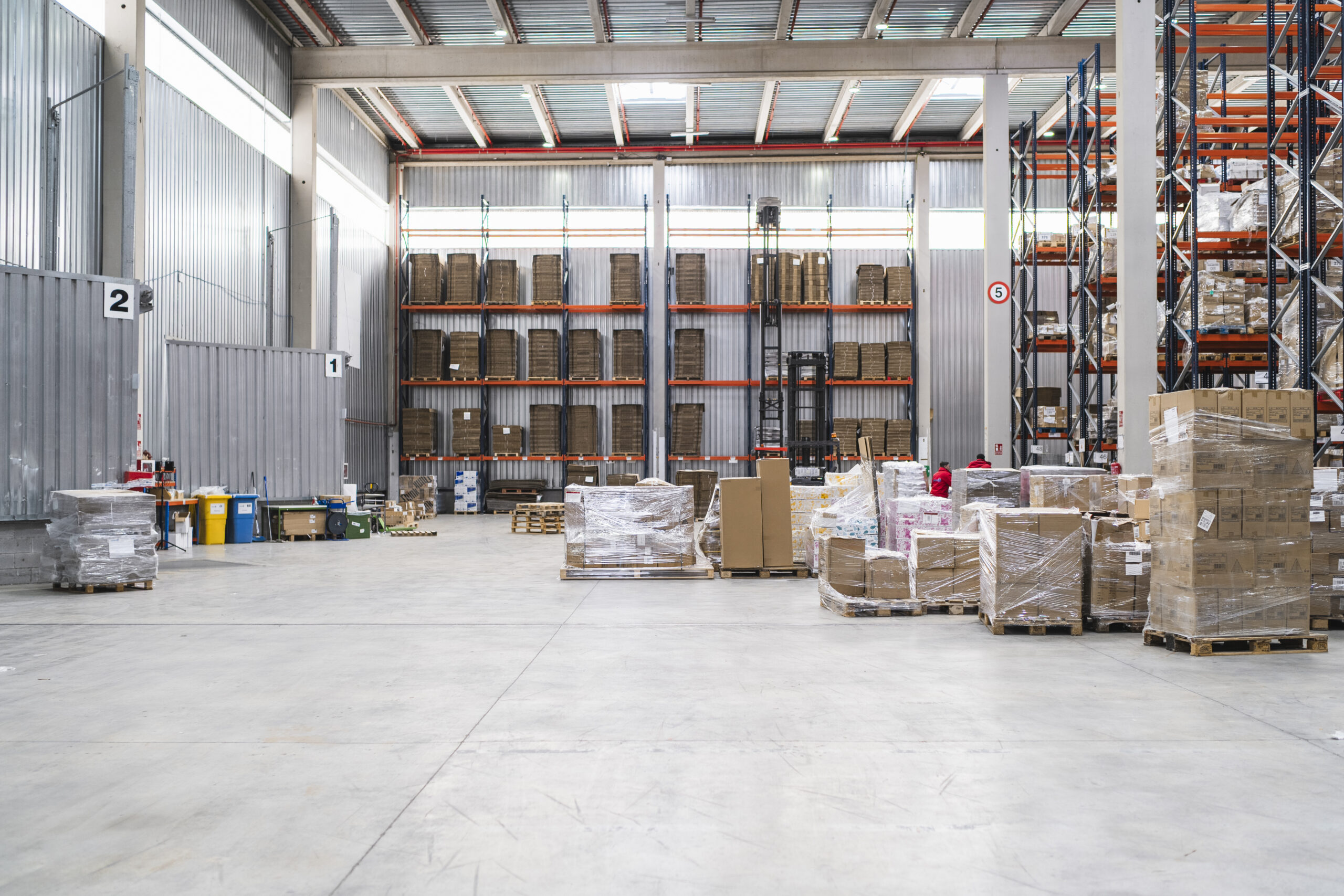
If you have a warehouse, then you need a formula too. That is, you need a way to track a lot of information and account for a huge quantity of items spread over a large area. At AES, we do that by organizing everything around the flow of inventory. Pipe comes in one side of the warehouse and goes to an established place before it gets logged in the system. We store it in the aisles near the products it’s supposed to be sold with. When an order is pulled, there’s a dedicated area for it to be double-checked and prepped before shipping. We also divide our spaces by their intended use. We organize aisles by brand and then by product type. There are also separate spaces for receiving, shipping, and data entry, and there’s an established spot for every tool we need to get the job done.
From there, we ask one fundamental question when evaluating our operations: How can we make pulling the items on any order as simple and fast as possible? That question shapes every optimization we make. Our pick tickets print bin locations in ascending order so the puller can move in a straight line down an aisle. The wrapping machines sit between where the freight is staged and where it goes to be picked up. Pallets ready for pickup are lined up as close to the dock doors as possible and organized by carrier.
Of course, you likely don’t have the same jobs we do, but the basic idea translates. If you have a tech in the field, you know what equipment the job requires, and chances are, your tech has the truck organized so the first tool needed to diagnose a fireplace is right there at the tailgate, easy to reach.
If you own your own shop, consider the natural flow of product in and out. Does it come in one side and stage in a specific area before it goes on the work truck? Do your installers have a dedicated spot to grab tools or materials? Do they carry standard items on the work vehicles? Do they have dedicated toolboxes for electrical, gas, or venting components?
Whatever your answers, consider this an invitation to review your processes and ask whether everything has a place. Because when it does, your team spends less time searching and more time doing the work that matters.
Principle 2: Use Visual Cues
A business is a complex organism with lots of processes and lots of different tasks. Often, the hardest part isn’t doing the work—it’s keeping track of the work and making sure each task gets completed. As the old adage goes, “Out of sight, out of mind.” When tasks aren’t visible, they slip through the cracks.
The most effective way to ensure that a task gets done is to make it visible, so everyone can see what’s been completed and what comes next. This is especially important when an order is changing hands or when a task gets set aside because a higher priority demands attention.
At AES, one of our favorite ways to do this is with cones. Sometimes new associates will have trouble finding a part they haven’t seen before, or the record of which bin it’s stored in wasn’t kept up to date. When that happens, we take a cone and write a message on it with a dry-erase marker so that our veterans have a visual cue and everyone else knows not to wrap that order up before we’ve taken steps to find the missing part. Even our pick tickets use this principle: If a salesperson has special instructions on the order, that information is automatically highlighted on the paper to draw the attention of the warehouse staff and reduce the chances of missing it.
Another way we use visual cues is for tracking equipment and building maintenance. Our machines are primarily powered by large batteries that need to be topped up with water each month. To track that and make it apparent to everyone who uses the machines, we have a dry-erase magnet on each one. Then, we write the date the maintenance was done and when the next maintenance cycle is due.
These same strategies can be applied to any area of your business that requires real-time feedback or regular action. If you run a retail shop with a small warehouse, for example, consider using tags to flag a fireplace and vent kit that’s almost ready for installation but is still waiting on a part. A whiteboard near the loading area can also show which jobs are in progress, which are waiting, and which are ready to go. And for routine maintenance, you might post a checklist on each service truck showing when inventory was last restocked, or hang a schedule in the shop tracking when vehicles are due for service.
If you try these types of strategies, you’ll find the benefits go both ways: Your team executes better because installers don’t show up to a job missing parts, and owners or managers can walk through and see the status of various projects at a glance without having to ask a bunch of questions.
More often than not, success comes down to having the right information at the right time. When everyone can see what’s done and what’s next, your team spends less time chasing information and more time getting the actual work done.
When everyone can see what’s done and what’s next, your team spends less time chasing information and more time getting the actual work done.
This article is brought to you by HPBExpo.

Principle 3: Be Nice to the People Helping You
When I was younger, I spent a few years working in one of the big-box hardware stores. There’s one customer interaction from that time in my life that’s stuck with me ever since.
We had an associate who worked in the appliance section and had been there for a number of years. She was relatively young, very knowledgeable, well-spoken, and good at working with customers—an A+ customer service associate.
One day, an older gentleman visited the store because he had a problem with a refrigerator he’d bought from us. Even before he interacted with our young appliance associate, he was visibly upset, ready to blow his top, and had no patience for dealing with anyone, which was somewhat understandable. After all, he’d just made a big purchase, and now he was having problems with his brand-new appliance.
This gentleman decided that the way to handle his particular problem was to make underhanded comments to our associate. She diligently helped him until it was clear that nothing she did would make him happy. At that point, she decided to bring in a Vietnam veteran who also worked in the store.
The customer had a different attitude toward him, perhaps because it was someone he felt more akin to. But he was still behaving in an unbecoming way. After a minute or two of this treatment, our veteran looked straight at the irate customer and said, in a very calm and pleasant voice, “It’s always smart to be nice to people who are helping you.”
From that moment on, the customer was silent. He worked easily with us, and we took great care of him.
I’ve been fortunate to have this attitude toward service people modeled for me as I grew up, and it’s always been part of the AES culture that we talk to and about each other in a respectful way.
As I’ve grown older, that lesson has taken on an even deeper meaning. I’ve attempted to learn everything I possibly can about how our business works, and the more I learn, the more I find that there’s still more to learn. I’ve come to the realization that I’m always going to need help from other people. Either the job is too big and complex for one person to handle, or I lack the knowledge to handle the entire situation. No amount of knowledge or proficiency will overcome this simple truth.
Therefore, one of the most important things you can do when interacting with people—whether they have seniority over you or report to you—is to be kind and respectful. It sounds obvious when you put this principle into words, but at all stages of business, you need the help of others. You need your customers’ help because they keep you in business; you need your sales team’s help to gather more customers; you need installers’ and technicians’ help to service those customers; and you need accountants, data processors, truck drivers, and warehouse associates to help you build a functioning business.
I’ve found that people are always more likely to help me when they feel respected and enjoy talking to me. Because of that, I think it’s important to always try to speak positively when interacting with people. That can be hard when you’re trying to correct people on your team, but you’ll always be starting ahead when they can tell you care about how your words come across and they hear a positive tone in your voice.
People are always more likely to help me when they feel respected and enjoy talking to me.
So the next time you feel frustrated, have a high-pressure situation to deal with, or need to correct someone on your staff, take a second to center yourself on the goal you want to accomplish. Remember that people are more likely to adopt your way of doing things or help you reach your goal if they feel like you respect them. And always keep the veteran’s advice in mind: It’s smart to be nice to the people helping you.
The Warehouse That Works for People
In the end, I owe a lot of who I am today to the people at AES who came before me. I wish I could take credit for the ideas I’ve shared here, but I’m the product of many people, and these thoughts are not original. Instead, they come from bits of old wisdom that I’ve picked up over my many years in our industry.
In all that time, the most important lesson I’ve learned is that the warehouse is all about people. After all, every system, every process, and every interaction is ultimately about ensuring that your team can do their best work and your customers get what they need.
That’s why all three principles above point in the same direction: You organize your space so the work can flow; you use visual cues so nothing falls through the cracks; and you treat people the way you’d want to be treated because none of it works without them.
Simply put, your warehouse should serve your people—the ones doing the work and the ones counting on the results—not the other way around.
Want to get free content like this every month?

Allen Newby
Allen Newby is the purchasing and distribution center manager at Associated Energy Systems (AES).


